
The Mind-Body Connection: How Hypnotherapy Supports Real Healing
Healing through hypnotherapy begins with recognising that the mind and body are not separate. What we experience emotionally can affect how we feel physically, just as ongoing physical symptoms can influence how we think, feel and respond. Stress can settle into the body, grief can leave us feeling exhausted, and the gut can react before we are even consciously aware of what is happening.
For many people, these experiences have been managed separately for years — the physical symptoms in one place, the emotional impact in another — without fully exploring how the two may be connected. At The MindShift Clinic, with clinics in Balgowlah and Allambie Heights on Sydney's Northern Beaches, we take a mind-body approach to understanding these patterns. This article explains how that connection works, what the research shows, and what hypnotherapy can genuinely offer within it.
What Does “Healing" Mean in a Hypnotherapy Context?
When we talk about healing, it's easy to think of emotional and physical wellbeing as two separate things. In reality, they are closely connected. Hypnotherapy works at the point where these two kinds of healing meet, rather than treating the mind and body as unrelated systems.
In this context, "healing" doesn't mean a cure. It means supporting the processes that can contribute to greater wellbeing — such as feeling more regulated, responding differently to stress, changing unhelpful patterns and developing greater awareness of the connection between your mind and body, and giving your body and mind a better chance to recover.
How Stress and Unresolved Emotions Can Affect the Body
Stress isn't just something we experience in our thoughts. The body responds to it too. When stress continues over time, the nervous system can remain in a heightened state of alert, which may contribute to physical experiences such as muscle tension, headaches, disrupted sleep or digestive discomfort. These symptoms can persist long after the original stressor has passed if the underlying pattern isn't addressed.
Many people only make the connection in hindsight, noticing that their headaches eased on holiday or that their sleep fell apart during a difficult period at work. This doesn't mean that physical symptoms are "all in your head", nor does it mean that stress is the cause of every physical condition. Physical symptoms can have many contributing factors and should always be appropriately assessed. But understanding the role that stress and emotional experiences can play may provide another important piece of the picture.
The US Centers for Disease Control and Prevention (CDC) has useful further reading on how stress affects both physical and mental health, if you'd like to understand more about this connection.
The Mind-Body Connection, Explained Simply
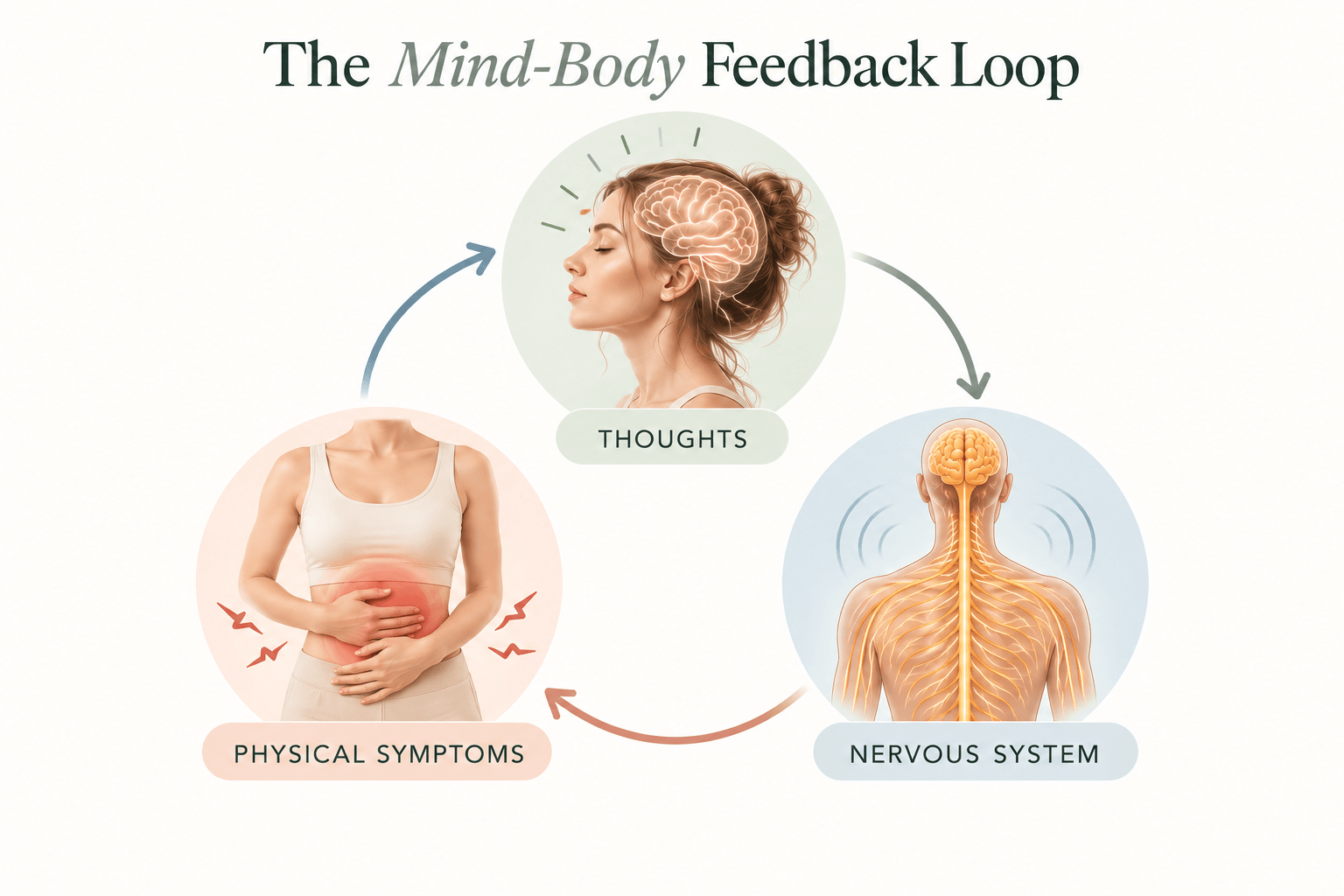
The mind and body are in constant communication through the nervous system. When you feel stressed or threatened, your body responds automatically — you may notice a racing heart, gut discomfort, muscle tension or perhaps your breathing may change.
And the communication works in the other direction too. Physical discomfort, poor sleep or ongoing pain can influence your mood, thoughts and capacity to cope.
A nervous system that's stuck in a heightened stress response has a harder time supporting genuine physical or emotional recovery. This is why calming the nervous system is often the real starting point for healing, rather than addressing physical symptoms or emotional distress in isolation. Managing stress won't resolve everything, but it can create a steadier foundation for everything else you're doing to look after your wellbeing.
This is where hypnotherapy can be useful — helping people develop different responses to stress and work with patterns that may be operating outside of conscious awareness.
How Hypnotherapy Supports the Healing Process
Hypnotherapy uses focused attention, guided imagery and therapeutic suggestions to help you explore different ways of responding to thoughts, feelings and sensations. Rather than pushing against a symptom or emotion, the aim is to help the mind and body settle enough that new responses become possible.
Sessions are tailored to your goals and may include practising strategies for managing stress that you can take into everyday life. For more on how automatic habits and responses form, read our companion article on subconscious patterns and hypnotherapy.
In a session, this might mean beginning by helping your nervous system settle before moving towards the issue you're wanting to change. You aren't required to relive difficult experiences or force yourself to feel differently. Instead, you are gently guided towards a state where you can notice what is happening, observing there is more space to notice thoughts, emotions and patterns without having to fight or analyse them. From here you can begin to explore new possibilities and start moving towards more helpful ways of responding in your everyday life.
Where the Evidence Stands, Including the Monash University IBS Research
Research from Monash University has found that gut-directed hypnotherapy can improve symptoms in some people with irritable bowel syndrome (IBS). This is a specific form of hypnotherapy aimed at gut symptoms, and it reflects the well-established connection between the gut and the brain.
These findings support its use for IBS symptom management, but do not establish that hypnotherapy heals physical illness generally or that the same benefits apply to every condition. We think it's important to be clear about that distinction, so you can make an informed decision about whether this approach is right for you. The Australian Society of Clinical Hypnotherapists also provides information on professional standards and accreditation in hypnotherapy.
Who Tends to Benefit From This Approach
People experiencing chronic stress and burnout often benefit from an approach that addresses the nervous system directly, rather than only managing the physical symptoms stress produces. Our Anxiety & Stress service page covers this in more depth. Grief is rarely linear, and it often carries a physical weight alongside the emotional one: exhaustion, disrupted sleep, a general sense of heaviness. Our Grief service page reflects how grief can be approached - gently and at your own pace.
Conditions such as IBS, chronic pain, migraines or tics often have a stress component, even when they present as purely physical. Our Pain Management and Irritable Bowel Syndrome service pages cover how this approach applies to physical symptoms with an emotional or stress-related dimension.
Stress can influence physical symptoms, but it is not their only possible cause. New, persistent or worsening symptoms should be assessed by a medical professional. Hypnotherapy may be considered alongside appropriate medical care, rather than as a replacement for it.

What Healing Through Hypnotherapy Looks Like at The MindShift Clinic
Every session is built around where you actually are, not a fixed program applied the same way to everyone. This matters particularly for grief and chronic stress, where a rigid, one-size-fits-all approach can feel like another demand rather than genuine support. Some days you may want to work on a specific symptom, and other days simply feeling calmer is the goal. Both are valid parts of the process.
Hypnotherapy is often combined with Intention-based Energy Tapping as part of a broader, gentle approach to supporting the nervous system and working with the subconscious together. Rather than relying on a single technique in isolation, different techniques can be integrated according to what feels most appropriate to you in that moment. We see clients across Sydney's Northern Beaches, with clinics in Balgowlah and Allambie Heights.
“I particularly enjoy combining tapping with hypnosis because tapping can be a useful way of helping someone shift out of overthinking, provide a reasonably fast relief and connect more with what they are experiencing in their body. It can also help reduce the emotional intensity surrounding a particular issue, creating more space to look at the situation from a different perspective. During a session, I may use Intention-based Energy Tapping alongside hypnosis as we work through different aspects of what you are experiencing. Afterwards, tapping can also become a practical tool you can use for yourself between sessions, whenever you feel you need some additional support.
Everyone experiences this differently, but clients often describe the process as calming and relaxing. Some talk about having a sense of greater peace or clarity, or simply appreciating what it feels like to have some quiet from the constant noise in their head.”

Frequently Asked Questions
-
Sessions may use focused attention, visualisation and therapeutic suggestions to support your individual goals. Here, “healing” refers to support with coping, wellbeing, symptom management, and addressing the underlying patterns rather than a promise to cure a condition. The approach and pace are discussed with you.
-
Hypnotherapy may help with the management of some physical symptoms. Gut-directed hypnotherapy has evidence supporting its use for IBS, and hypnosis may help with some pain conditions. Evidence varies by condition, so findings in one area should not be assumed to apply equally to others. Hypnotherapy should complement, rather than replace, appropriate medical assessment and care.
-
Yes. Research from Monash University has specifically examined hypnotherapy's role in managing IBS, reflecting the well-established gut-brain connection. This is one example of an evidence-informed basis for the mind-body approach, rather than an unsupported wellness claim.
-
The process is deliberately gentle and paced to the individual, particularly for grief or chronic stress, where a rigid or intense approach can feel counterproductive. Healing isn't linear, and the approach reflects that.
-
At The MindShift Clinic, sessions may include both hypnotherapy and Intention-based Energy Tapping, depending on the individual approach discussed with you. These are distinct techniques. The Monash University research discussed above examined gut-directed hypnotherapy for IBS; it did not evaluate Intention-based Energy Tapping or this combination.
Take the Next Step
If you're dealing with chronic stress, grief, or physical symptoms that seem to have an emotional thread running through them, we'd be glad to talk it through with you, in clinic across Sydney's Northern Beaches in Balgowlah and Allambie Heights.
Learn more about Katarina McNamara's approach and background, or book a free consultation to take the next step.